CMS collaboration celebrates 1,000th paper
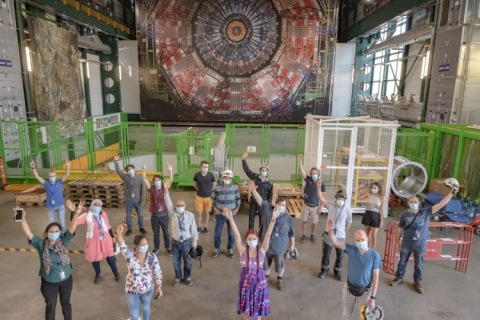
On Friday 19 June 2020, scientists at the CMS experiment at CERN's Large Hadron Collider submitted their 1,000th paper. This monumental achievement reflects an outstanding contribution to humanity's understanding of the universe — and it's just the beginning.
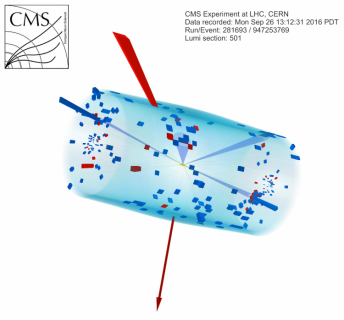
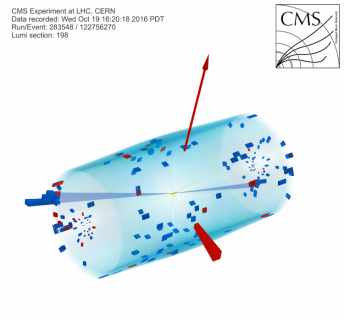
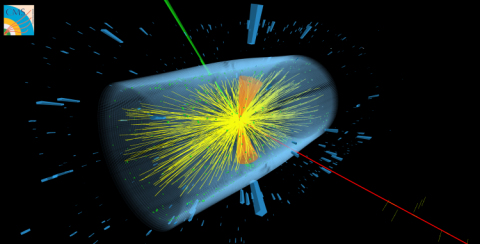
Triple Treat! CMS observes production of three massive vector bosons
The CMS collaboration has released the first observation of the simultaneous production of three W or Z bosons in proton-proton collisions at the Large Hadron Collider (LHC). The result is based on the data collected by CMS during 2016–2018 at a collision energy of 13 TeV.
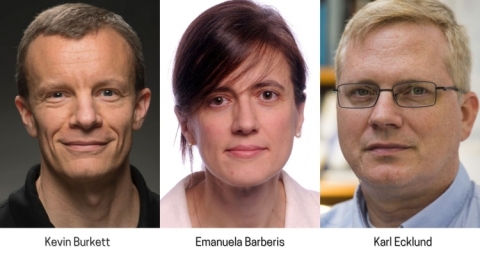
CMS PHD Thesis Award 2019
June is the month of the PhD Thesis Award at CMS, the prize that aims to recognise the best PhD Thesis of the year based on impact, original contribution and clarity.
25 CMS theses were nominated to compete for the CMS PhD Thesis Award for 2019.
- Read more about CMS PHD Thesis Award 2019
- Log in to post comments
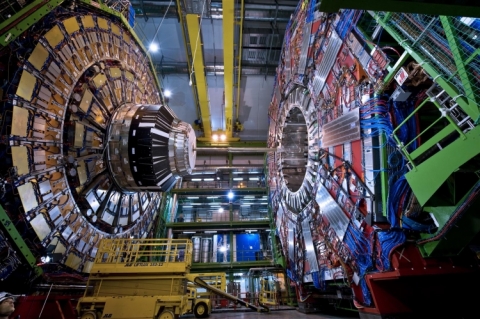
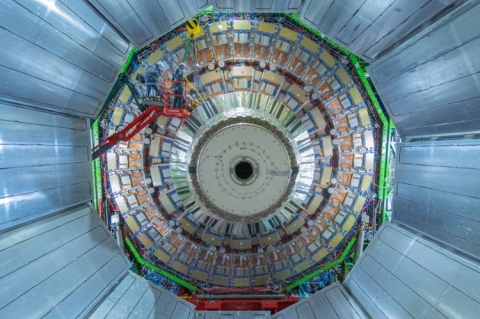
CMS magnet warm up
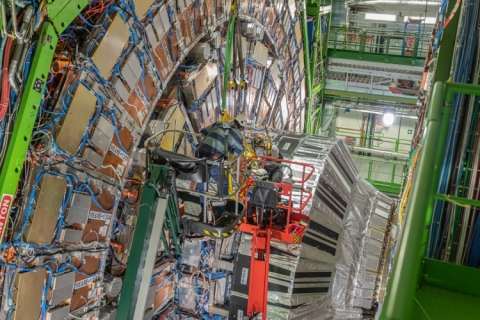
The CMS magnet, one of the largest superconducting magnets in the world, with the largest stored energy, has been warmed up in April-May 2020 in order to perform an intervention on the vacuum pumping system.
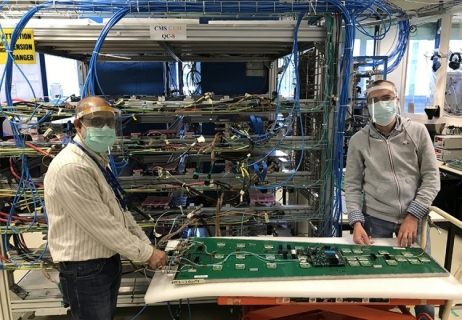
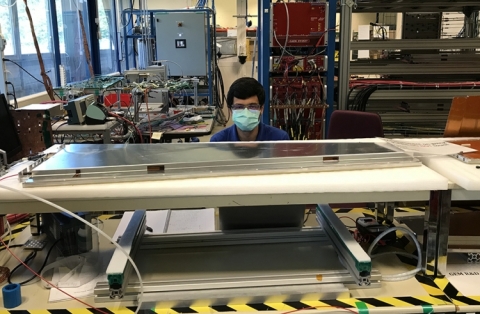
New precision timing detector for the CMS HL-LHC upgrade
Soon after 2027, the LHC will enter the high luminosity era, known as HL-LHC, during which it is expected to deliver about 20 times more data than delivered up the end of Run 2.
2019: a year in review
2019 is approaching its end with it the first year of the LHC Long Shutdown 2 (LS2),a break that focuses on the upgrade and maintenance of the LHC.
- Read more about 2019: a year in review
- Log in to post comments
CMS Gets the Royal Treatment
Early one morning, residents of the Pathum Wan District of Bangkok were greeted to the rare spectacle of dozens of physicists in formal attire walking the streets of Bangkok on their way to meet Her Royal Highness Princess Maha Chakri Sirindhorn of Thailand.
- Read more about CMS Gets the Royal Treatment
- Log in to post comments
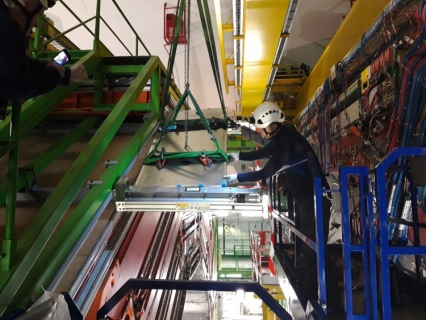
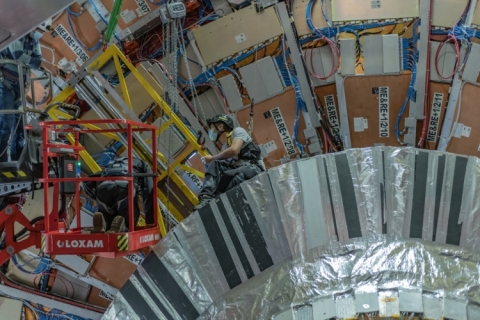
The ECAL prepares to extract the super-modules from CMS
The CMS electromagnetic calorimeter (ECAL) measures the energy of electrons and photons produced in the LHC collisions with extreme precision.