CMS sees evidence for the Higgs boson decaying into muons
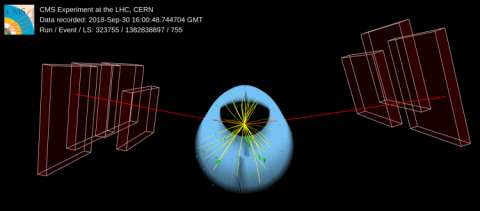
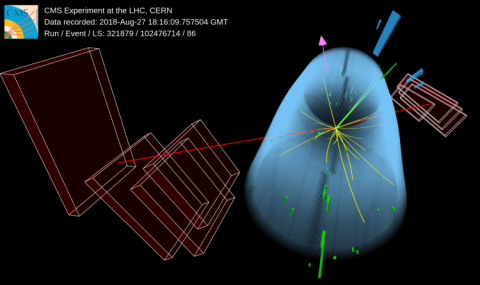
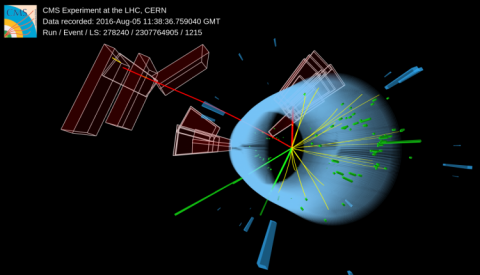
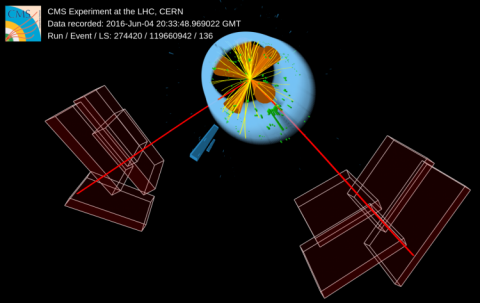
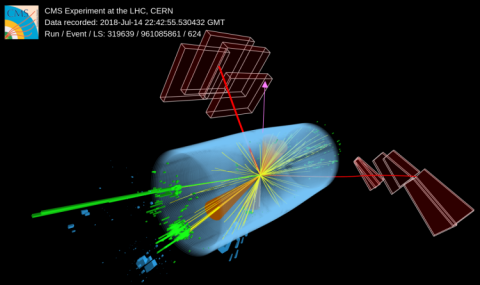
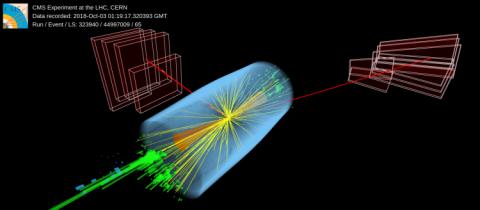
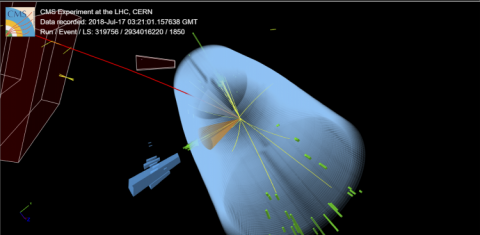
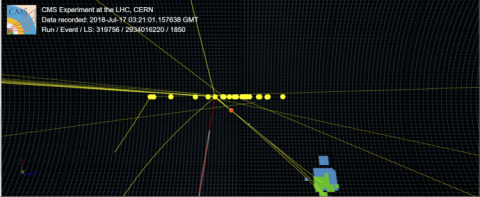
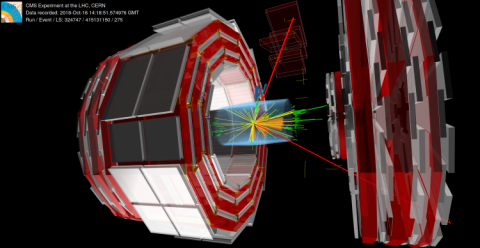
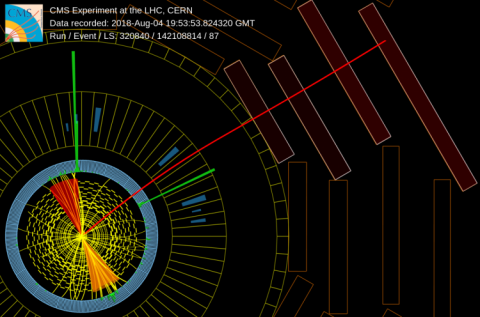
A new result released by the CMS Collaboration presents the first evidence of the Higgs boson interacting with the muon.

A new result released by the CMS Collaboration presents the first evidence of the Higgs boson interacting with the muon.
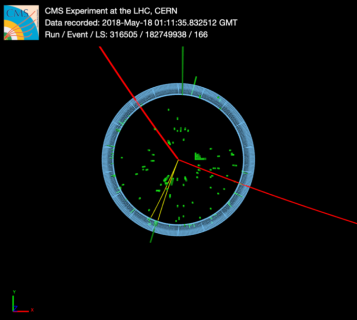
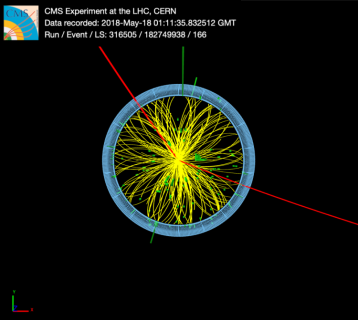
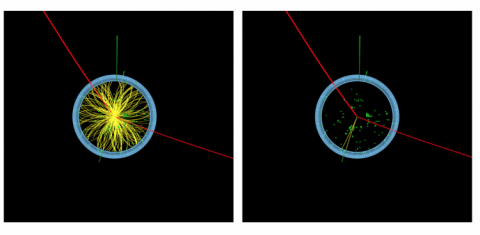
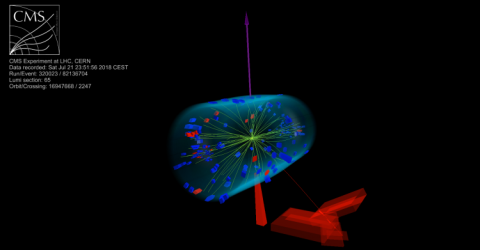
A question researchers at the LHC are trying to answer is whether the properties of the Higgs boson are as predicted by the standard model. One way to do this is to look for extremely rare decays of the Higgs boson, as physicists in the CMS collaboration did recently.
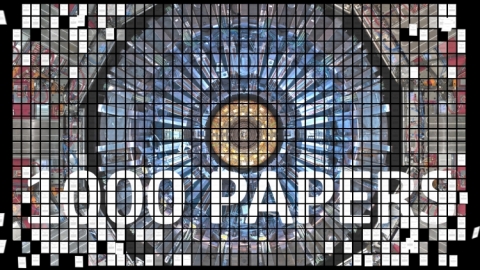
On Friday 19 June 2020, scientists at the CMS experiment at CERN's Large Hadron Collider submitted their 1,000th paper. This monumental achievement reflects an outstanding contribution to humanity's understanding of the universe — and it's just the beginning.
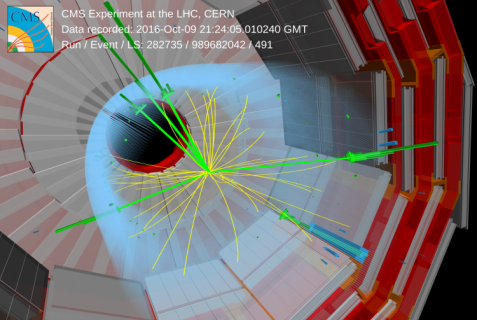
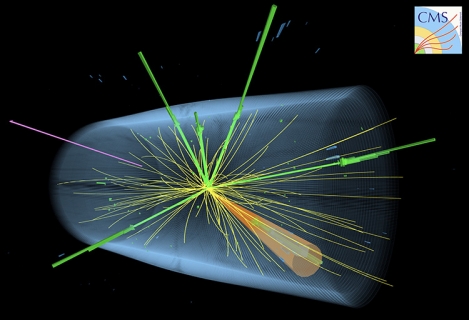
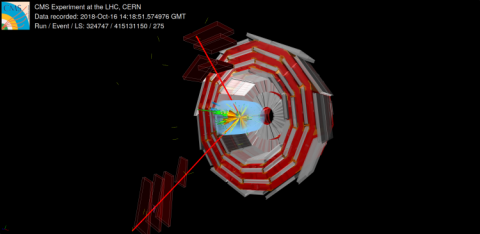
The CMS collaboration has released the first observation of the simultaneous production of three W or Z bosons in proton-proton collisions at the Large Hadron Collider (LHC). The result is based on the data collected by CMS during 2016–2018 at a collision energy of 13 TeV.